




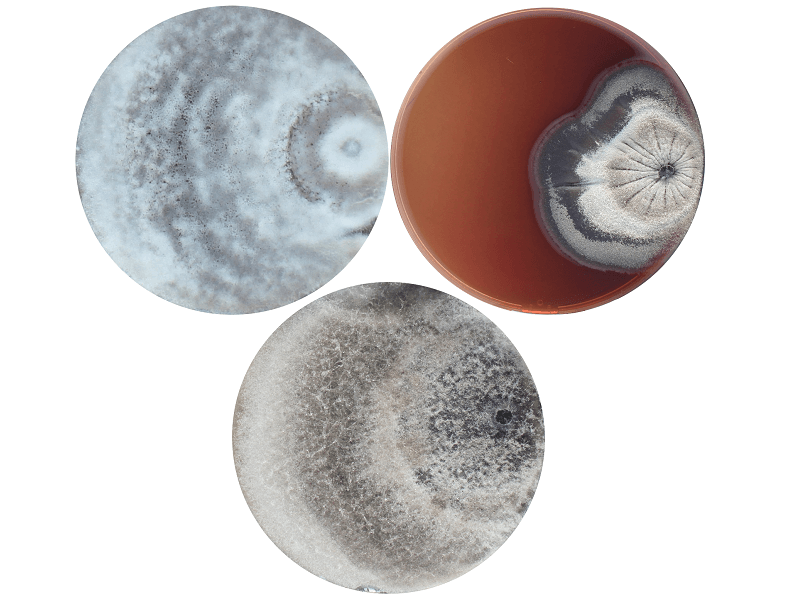
Grapevine wood diseases (GWD) represent a major problem for the wine industry today, and mainly involve three diseases: esca, BDA (Black Dead Arm) and eutypiosis. These decline diseases are linked to a dozen or so pathogens, penetrating vine stocks mainly via pruning wounds and causing necrosis in the wood of the vines.
The symptoms of eutypiosis have been widely described, and most often correspond to stunted foliage and a chlorotic appearance of the leaves. Foliar symptoms of esca and BDA are expressed in two forms: a lightning-fast form, called apoplexy, corresponding to the sudden drying out of part or all of the stock, and a slow form with characteristic foliar symptoms (interveinal discoloration), leading to the progressive weakening of the stock. The same vine may express one or both of these forms, depending on climatic conditions and the plant's physiological state. Distinguishing between the symptoms of esca and BDA is, however, a delicate matter. Symptoms linked to BDA can also affect fruit.
The complexity of MBV is amplified by the random nature of leaf symptom expression. Indeed, a vine may show symptoms one year and be asymptomatic the next. Monitoring the evolution of these decline diseases and the effectiveness of a control method can only be carried out on a large number of plots, representing the different wine-growing regions of France. This is what Agrauxine has been striving to achieve since 2012 with its national evaluation network for Esquive® WP.
Attached photo: three pathogens involved in MBV, grown on PDA in Petri dishes in the laboratory.
Top left: Neofusicoccum parvum (BDA)
Top right: Phaeoacremonium aleophilum (esca)
Bottom: Diplodia seriata (BDA)
Photo credit: Agrauxine (M. Cadiou)