



Today, many winegrowers are caught off guard by the increase in Esca/BDA foliar symptoms. But solutions do exist! Here's an overview of effective practices.
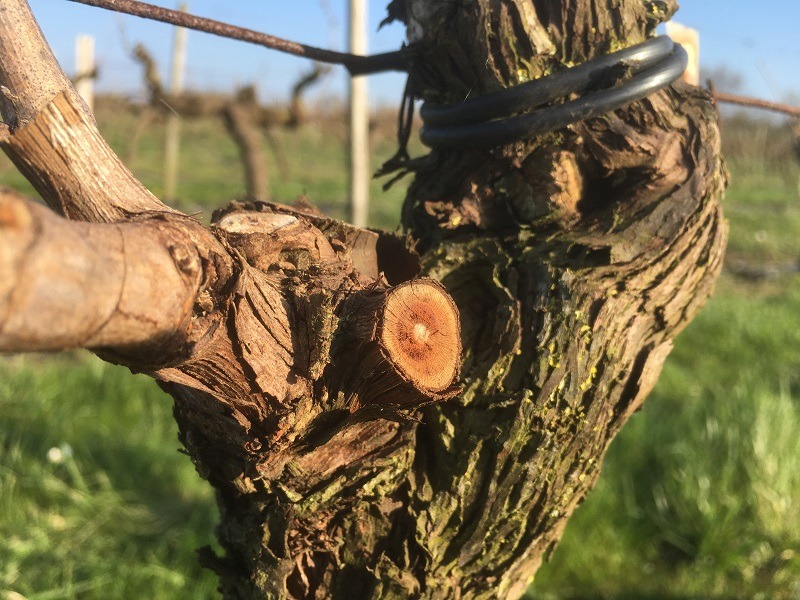
With the evolution of pruning practices, the increasing number of pruning wounds has become a real gateway for the pathogens responsible for wood diseases: Esca and BDA (Black Dead Arm). Various measures can be taken to limit the number and size of pruning wounds: pruning that respects the "flow of sap" ensures better water supply to the foliage, while pruning that avoids creating wounds that are too large or too close to the heart of the stock will limit the penetration of pathogens deep down. Favoring green disbudding limits the number of pruning wounds, and leaving drying cones delays pathogen penetration.
In order to limit the impact of wood diseases, we must first and foremost limit the spread of pathogenic fungi. Removing dead vines and branches is an important first prophylactic measure to limit the risk of contamination. Using "healthy" young vines for each planting is a second step towards a healthier plot(http://www.mercier-groupe.com/fr/force-t). Finally, vine management must be adapted and vigour controlled, as excessive vigour will encourage the appearance of foliar symptoms. Conversely, stunted or unhealthy plants are less resistant to pathogens.